
Okay, let's talk about Blue Lotus. If you've been anywhere near our diffuser lineup lately, you've probably seen this dreamy little bottle and wondered what the fuss is about. So let's get into it: the history, the chemistry, the scent, the cautions, all of it. Grab your tea. This one's a good story.
Wait... Blue Lotus Isn't Even a Lotus?
Nope. Plot twist right out of the gate. Blue Lotus Absolute/ Essential Oil is botanically Nymphaea caerulea, a water lily native to Egypt and the Indian subcontinent, but somewhere along the way "Blue Water Lily" lost the branding battle and "Blue Lotus" stuck. Fine by me. It's a gorgeous name for a gorgeous flower.
She only opens her mauve-blue petals in the morning sun and closes back up at night, which means harvesters get a tiny window to catch her blooming. High maintenance? A little. Worth it? Absolutely, no pun intended.
The Flower Egyptians Couldn't Get Enough Of
Here's where it gets good. Blue Lotus was so woven into ancient Egyptian life (ceremony, art, ritual, daily devotion) that some historians actually refer to her as "the cannabis of ancient Egypt." She's carved into temple walls. She's painted into tombs. She shows up in bouquet after bouquet in Egyptian art, held up like the treasure she was considered to be.
And she wasn't just an Egyptian icon, either. In Hindu mythology, Blue Lotus is associated with Lord Krishna himself, so we're talking about a flower that's been sacred across two entirely different cultures and continents for thousands of years. That's not a trend. That's staying power.
Today, that same organically crafted Blue Lotus Absolute, extracted from those majestic mauve-colored flowers, is considered one of the rarest, most precious extracts in the world. An intoxicatingly alluring floral masterpiece, and a truly mesmerizing anointing oil for meditation. She's earned every bit of that reputation.
What's Actually In the Bottle (the chemistry, made simple)
I know, I know, chemistry talk can feel dry. I promise this part is actually fascinating, because it explains why Blue Lotus feels the way she feels.
Nuciferine. This is the headliner. An aporphine alkaloid that's the compound most associated with that dreamy, softly sedating, mood-easing quality people describe when they use Blue Lotus. It's thought to interact with dopamine receptors, which is the working theory behind why this oil feels calming and quietly euphoric all at once.
Apomorphine. Nuciferine's sidekick, showing up in smaller amounts. Also plays with dopamine pathways, and it's more potent and variable batch to batch, which is exactly why sourcing and quality matter so much with this particular oil.
Apigenin. A flavonoid, and the calming, anxiety-easing piece of the puzzle. Fun fact: it's the same gentle compound found in chamomile. Makes sense that Blue Lotus can feel like a warm exhale in a bottle.
Quercetin & Kaempferol. The quiet, behind-the-scenes flavonoids doing antioxidant and anti-inflammatory work. Not the "feeling" compounds, but part of the reason Blue Lotus is also loved for skin support.
Aromatic terpenoids & sesquiterpenoids. These give Blue Lotus her actual scent depth and complexity, and lend a hand to that grounding, calming aromatherapy effect florals are known for.
What Blue Lotus Is Actually Used For
Blue Lotus has been treasured for a lot more than just smelling incredible (though, she really does).
She's considered the most hypnotic of the lotuses, and continues to be treated as an ethereal spirit tonic to this day. In meditation practice, she's used as an aid for opening the chakras, especially the Third Eye, and for dispelling negative thoughts and emotions along the spiritual path. A gorgeous choice for anointing.
She's also a genuine, authentic aphrodisiac. Euphorically relaxing, and widely used to support sexual desire, ecstasy, and connection between partners.
Beyond the spiritual and sensual side, Blue Lotus Absolute is a lovely support for overall skin health, and may help with minor pain, inflammation, and supporting the healing of wounds and scars.
You'll find her in perfumes, bath oils, shower gels, anointing blends, potpourri, facial steams, hair masks, incense, room sprays, candles... basically anywhere you want a little sacred, sensual energy.
One important note if you're using her in massage: the active alkaloids absorb through the skin, meaning both the giver and the receiver can experience the psychoactive effects. Good to know going in, not mid-massage.
What Does Blue Lotus Actually Smell Like?
Deep, warm, sweet floral, with a powdery, almost narcotic undertone. Picture jasmine and lily's moodier older sibling: sweet on top, earthy and musky underneath, never veering into saccharine territory. Some people catch a soft vanilla or honeyed note in there too. It's a scent that manages to feel grounding and a little euphoric at the same time. Sensual. Contemplative. Never loud.
What Blue Lotus Blends Well With
Because Blue Lotus works as a middle-to-base note, she's built to anchor and deepen a blend rather than sit on top of it.
She's beautiful with florals like jasmine, rose, orange blossom aka Neroli, and ylang ylang, adding that silky depth underneath them. She pairs gorgeously with woods like sandalwood and cedarwood for something warm and meditative, and with resins like frankincense and myrrh when you want to lean fully into that sacred, ceremonial energy. Bright citrus notes (bergamot, grapefruit, sweet orange) lift and balance her heavier sweetness so nothing feels too much.
Easy rule of thumb: bright oils to lighten her up, woodsy or resinous oils to lean into the sacred.
A Few Cautions Worth Knowing
Blue Lotus Absolute is a beautiful oil, and like anything powerful, she deserves a little respect.
She's an absolute, meaning she's highly concentrated, so always dilute, never apply neat. Because she contains naturally occurring psychoactive alkaloids (nuciferine and apomorphine), it's best to avoid her during pregnancy and while nursing. There's no reliable safety data, and these compounds are known to cross biological barriers. Not recommended for children, either. If you or someone you love is on medication that affects dopamine, like certain psychiatric or Parkinson's medications, check with a doctor first. And as always: patch test, and start low and slow, because everybody's body chemistry tells its own story.
The Bottom Line
Blue Lotus Absolute isn't just a pretty scent. She's a flower with four thousand years of story behind her, a chemistry that actually explains why she feels the way she feels, and a whole lot of heart in every drop. Whether you're diffusing her for a meditation practice, setting the mood for something sensual, or just chasing that dreamy, grounded feeling at the end of a long day, she's earned her place on your shelf.
See what she opens in you.
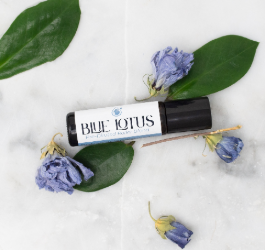
Blue Lotus is currently available in our Tallow + Botanics Luxury Skin Cream and in ready to apply and prediluted Ready Roller. Grab one (or both) today!