
Are Essential Oils Safe for Dogs and Cats? A Real Answer
If you've got a diffuser running in one room and a dog snoring in the other, you've probably wondered about this. Good. That means you're paying attention, and your pets are lucky to have you.
We're going to give it to you straight, because this is one of those topics where "it depends" isn't good enough. Essential oils and pets can absolutely coexist in the same home. They just can't coexist carelessly.
The Short Version
Dogs tolerate essential oils better than cats do, but "better than cats" is a low bar. Cats process compounds very differently than we do, which means a huge range of oils that are perfectly fine for humans can be genuinely dangerous for them, even in small amounts, even just from a diffuser running nearby. This isn't us being dramatic. It's just biology, and it's worth respecting.
The safest approach with any pet, cat or dog, is this: diffuse in a well ventilated space your pet can freely leave if they want to, never apply an oil directly to their skin or fur without guidance from your veterinarian, and keep bottles and blends out of reach so your pet can't lick them off a surface, your skin, or their bedding. If you're ever considering internal use for a pet specifically, that's a decision to make with your veterinarian or a certified animal aromatherapist, not something to try on your own.
Oils to Keep Away From Pets
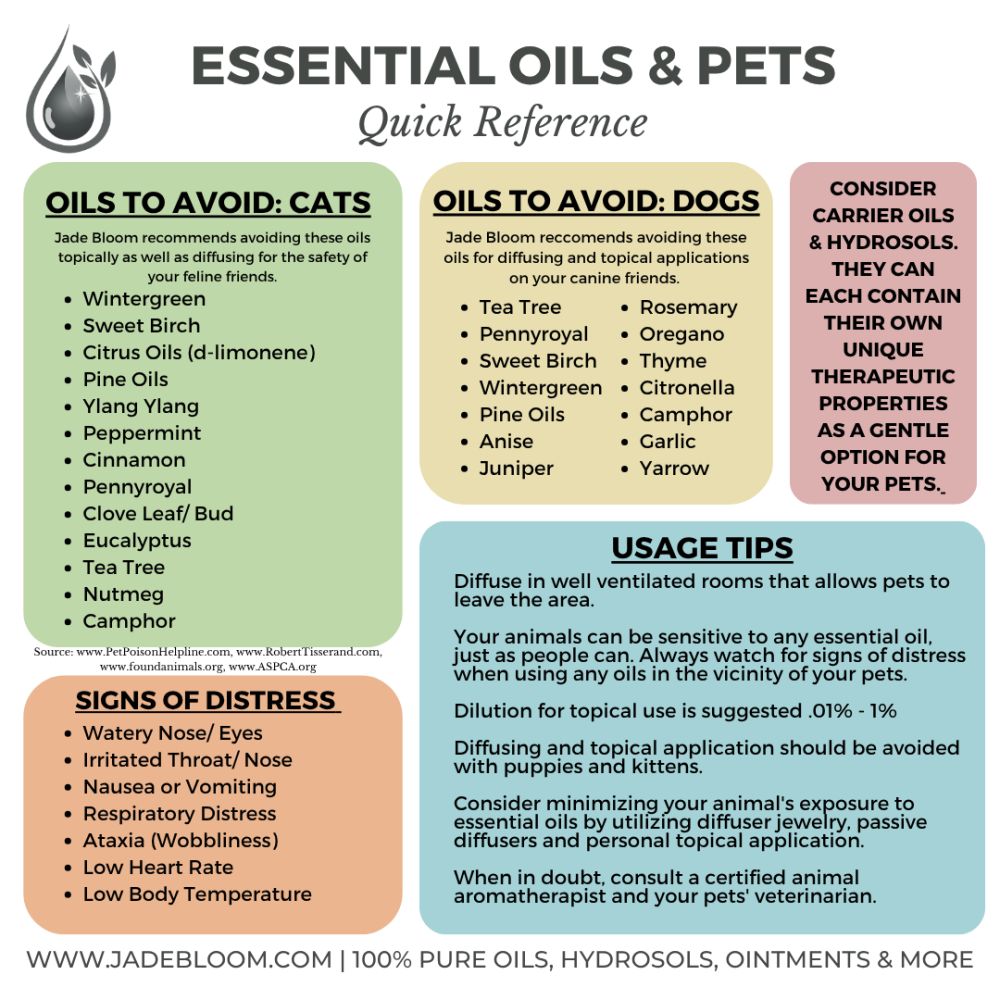
This isn't a complete list, and it's not a substitute for talking to your vet, but these are commonly flagged as unsafe around pets, especially cats:
- Tea Tree (Melaleuca)
- Wintergreen
- Pennyroyal
- Clove, Cinnamon, and Oregano (very hot, high phenol oils)
- Citrus oils in concentrated or undiluted form
- Ylang Ylang, particularly around cats
Again, this list isn't exhaustive. When in doubt, keep it out, and ask a vet who's familiar with essential oils before introducing anything new. We are also including a quick reference for your viewing pleasure that you can screen shot, save to your phone when a bit more direction is helpful.
What We Actually Recommend
Instead of trying to walk the line with your regular blends, we'd point you toward two things:
Garden Breeze Pet Safe Room Spray was formulated specifically for homes with pets. It's a gentle mix of distilled water, rose floral water, Bulgarian Lavender, and Roman Chamomile, made for aromatic use in the air, not for spraying on your pet directly. Spritz it in a room before you head to bed, or freshen up a space where your dog or cat naturally hangs out.
Hydrosols, like our Lavender or Chamomile hydrosols, are a much gentler option than essential oils themselves. They're the water based byproduct of distillation, far less concentrated, and generally considered a softer way to bring a calming scent into a pet friendly home.
A Few Ground Rules
- Never apply essential oils directly to your dog or cat's skin or fur without your veterinarian's input. What looks like a safe dilution for a human is often nowhere close to safe for an animal, and it varies a lot by species, size, and the individual oil.
- Give them an out. If you're diffusing, do it in a room your pet can leave. Never diffuse in a small, closed space with no ventilation.
- Watch for signs of distress. Drooling, pawing at the face, vomiting, wobbliness, or difficulty breathing means stop immediately and call your vet.
- Keep bottles capped and out of reach. Curious noses and unattended bottles are not a good combination.
- When it doubt, don't. If you're not sure whether something's safe for your specific pet, skip it until you've talked to a vet.
We've Got More Where This Came From
We know pet safety is one of the most common questions we get, which is why we've written about it more than once. Take a look at Essential Oils for Pets: A Guide to Safe Usage and Essential Oils + Dogs over on Jade Bloom University for even more detail. And if you want it in your inbox to reference later, email us at [email protected] and ask for our Pets and Essential Oil Safety Guide.
You don't have to choose between a home that smells good and a home that's safe for the four legged member of the family. You just have to be a little more thoughtful about how you get there. And honestly, that's kind of our whole philosophy around here anyway.
This information is for educational purposes only and is not intended to diagnose, treat, cure, or prevent any disease or condition in humans or animals, nor is it intended to prescribe in any way. Always consult a licensed veterinarian before using essential oils or hydrosols around your pets. These statements have not been evaluated by the FDA.