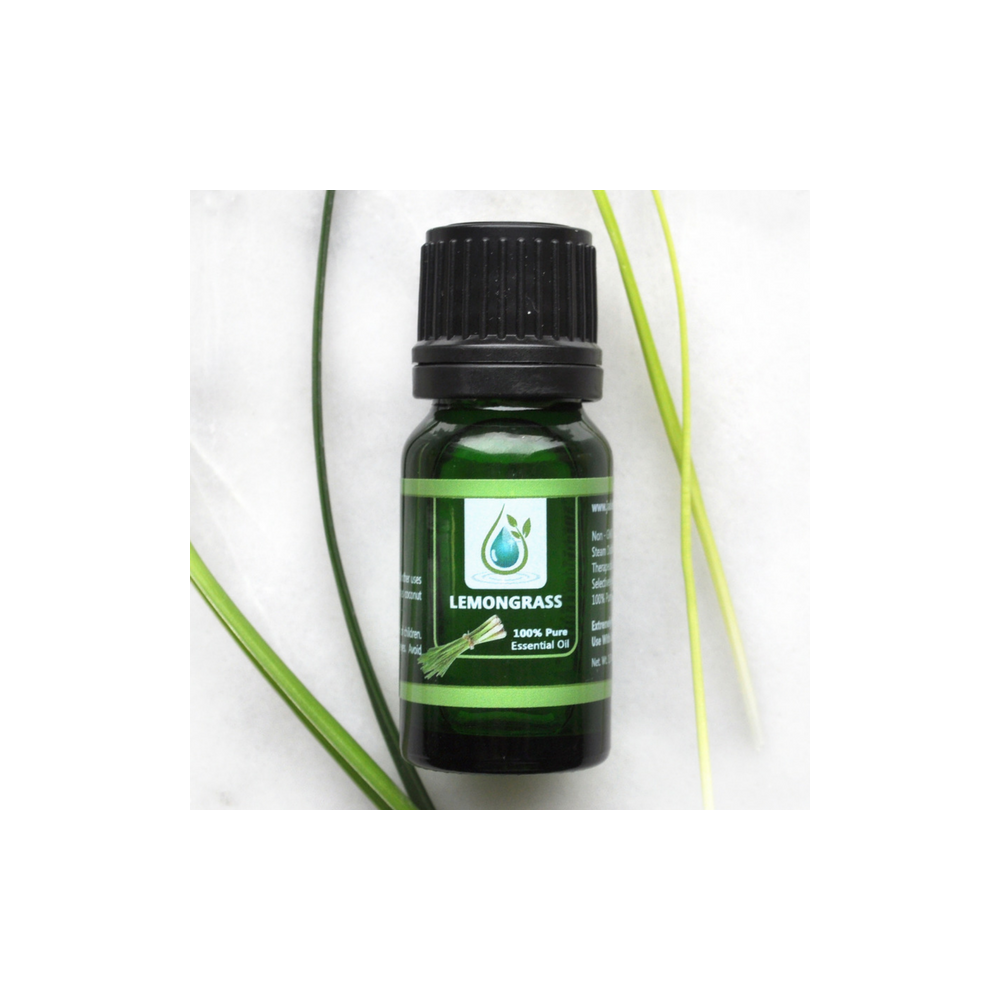
Lemongrass 100% Pure Essential Oil
Lemongrass Essential Oil: Bright, Sunny, and Wide Awake
Some oils whisper. Lemongrass walks in, opens the windows, and says “good morning!”
It’s fresh, lemony, and just a little grassy, with a clean brightness that makes a room feel lighter. A top note with medium strength, it’s the one you reach for when the air feels stale, the day feels heavy, or you just need a little sunshine in a bottle. Fair warning: a little goes a long way. This one is potent.
What is lemongrass essential oil?
East Indian lemongrass oil is steam distilled from the leaves of Cymbopogon flexuosus, a fragrant grass in the Poaceae family. You may also hear it called Cochin grass or Malabar grass, names that point back to regions of southern India. It’s thought to have origins in Southeast Asia and is native to places like Sri Lanka and South India.
Meet the plant
Cymbopogon flexuosus is a tall, clumping, perennial grass with long, narrow, aromatic blades. It’s a close cousin of citronella, which is why the two share that familiar lemony aroma. The cultivars grown for oil have reddish stems and regrow from their rhizomes each spring. Resilient little thing, isn’t it?
A long history across cultures
Lemongrass has been used for generations in cooking, herbal teas, cosmetics, and home traditions across South and Southeast Asia. Today it’s a staple in perfumery, soap making, candle making, and aromatherapy.
Meet the chemistry: what’s actually in the bottle
Lemongrass oil’s main constituent is citral, a mixture of two isomers: geranial (around 50%) and neral (around 30%), with smaller amounts of limonene, linalool, geraniol, and myrcene.
- Geranial: The sharp, bright lemon note.
- Neral: A softer, sweeter lemon note that rounds it out.
- Geraniol: A rosy, floral note that adds smoothness.
- Supporting players: Small amounts of geranyl acetate, limonene, linalool, and myrcene.
One study of C. flexuosus found geranial ranging from about 44 to 51%, neral about 29 to 34%, and geraniol from roughly 2 to 8%. Natural oils shift with the harvest, too. Researchers tracking one cultivar found that as the leaves matured, geraniol and geranyl acetate dropped sharply while citral rose from 56% to 81%. That’s why batch-to-batch variation is completely normal. It’s the beauty of botanicals.
Ways to enjoy lemongrass essential oil
- Diffusing: Brighten a room, especially in the morning. Blend with other citrus oils for a “sunny kitchen” feeling.
- Reed diffusers and potpourri: A little lemongrass adds lift to home fragrance.
- Lava stone jewelry: A drop on a lava bead bracelet or necklace gives you a personal, all-day scent. Keep the oil on the bead rather than directly on your skin.
- DIY room and linen sprays: Add a fresh, lemony scent to homemade room sprays and linen mists.
- Candles, soaps, and perfumery: A bright top note that pairs well with citrus, mint, and woody oils. Formulators, please check current IFRA guidance for citral limits.
- Very low dilution roller blends or massage oils: Keep strictly within the dermal limit below.
The feeling lemongrass brings
Light. Refreshed. Clear. Sunny. Bright. Energizing. Uplifting. Joyful. Open. Focused. Radiant. Inspired. Alert. Encouraged.
Aromatic profile
- Aroma: Fresh, lemony, slightly herbaceous
- Odor strength: Medium
- Note: Top
- Blends well with: Basil, bergamot, black pepper, Atlas cedarwood, chamomile, citronella, copaiba, coriander, cypress, eucalyptus, fennel, frankincense, geranium, ginger, grapefruit, helichrysum, lavender, lemon, lemon eucalyptus, lime, melissa, orange, patchouli, peppermint, petitgrain, rosemary, sage, spearmint, spike lavender, tangerine, tea tree, vanilla, wintergreen, ylang ylang
Safety: please read this one
Lemongrass is a potent, high-citral oil, and it deserves respect. Here’s what to know before you use it:
- Dermal maximum: 0.7%. This is the level recommended by Tisserand and Young’s Essential Oil Safety. That’s roughly 4 drops per 1 oz (30 ml) of carrier oil, and no more.
- Skin sensitization and irritation: A European safety opinion on C. flexuosus oil said it should be considered an irritant to skin and eyes and a dermal and respiratory sensitiser. Never apply undiluted.
- Skin condition: Do not use on hypersensitive, diseased, or damaged skin.
- Pregnancy, nursing, and children: Avoid during pregnancy and nursing, and for children under 2.
- Medications and health conditions: If you take medications or are managing a health condition, please check with a qualified clinical aromatherapist or healthcare provider first.
- Pets: Diffuse in a well-ventilated space and give animals room to leave. Keep oil out of their reach.
- Storage: Keep tightly capped in a cool, dark place. Oxidized oils are more likely to irritate skin.
For external and aromatic use only. Keep away from eyes and out of reach of children.
Product details
- Botanical name: Cymbopogon flexuosus
- Plant family: Poaceae
- Plant part: Leaves / aerial parts
- Extraction: Steam distilled
- Origin: India
- Ingredients: 100% pure Cymbopogon flexuosus essential oil
- Sizes available: 10 ml, 60 ml, 120 ml
These statements have not been evaluated by the Food and Drug Administration. This product is not intended to diagnose, treat, cure, or prevent any disease. This information is for educational purposes only. Consult a qualified professional reference for dilution guidance before use.
Lemongrass FAQ
What does lemongrass essential oil smell like?
Fresh, bright, and lemony with a slightly grassy, herbaceous edge. It’s a top note, so the scent is vivid at first and softens as it evaporates.
What is the difference between lemongrass and citronella?
They’re related grasses with a similar lemony scent but different chemistry. Lemongrass is dominated by citral, and it needs more careful dilution for skin.
What is citral?
Citral is the combination of geranial and neral, two lemon-scented aldehydes that make up most of lemongrass oil.
Is lemongrass essential oil safe on skin?
Only when heavily diluted. The commonly cited dermal maximum is 0.7%, and this oil can cause irritation or sensitization. Always patch test, and avoid damaged or sensitive skin.
What is the difference between East Indian and West Indian lemongrass?
East Indian lemongrass is Cymbopogon flexuosus, and West Indian lemongrass is Cymbopogon citratus. In one study, the citral content in C. flexuosus was about 10% higher than in C. citratus.
Can I diffuse lemongrass around pets?
Use caution. Keep it in a well-ventilated area, limit diffusing time, and let pets leave the room freely. Ask your veterinarian before using essential oils around animals.
How do I store lemongrass essential oil?
Keep it tightly capped in a cool, dark place, away from heat and sunlight.
What blends well with lemongrass?
Citrus oils, lavender, peppermint, eucalyptus, ginger, frankincense, geranium, and ylang ylang are all lovely partners.
What sizes does lemongrass essential oil come in?
We offer 10 ml, 60 ml, and 120 ml bottles.
| UPC Barcode | 641990784152 |
|---|---|
| Scientific Data | Adinarayana G., et al. (2012) Evalauation of antimicrobial potential of field distilled and water-soluble essential oils of |
| Uses | Pain / Inflammation, Sleep, Skincare, Relaxation, Haircare, Antibacterial / Antiviral, Allergies, Digestion |
| Aroma | Citrus, Hot |
Customer Reviews
recommend this product