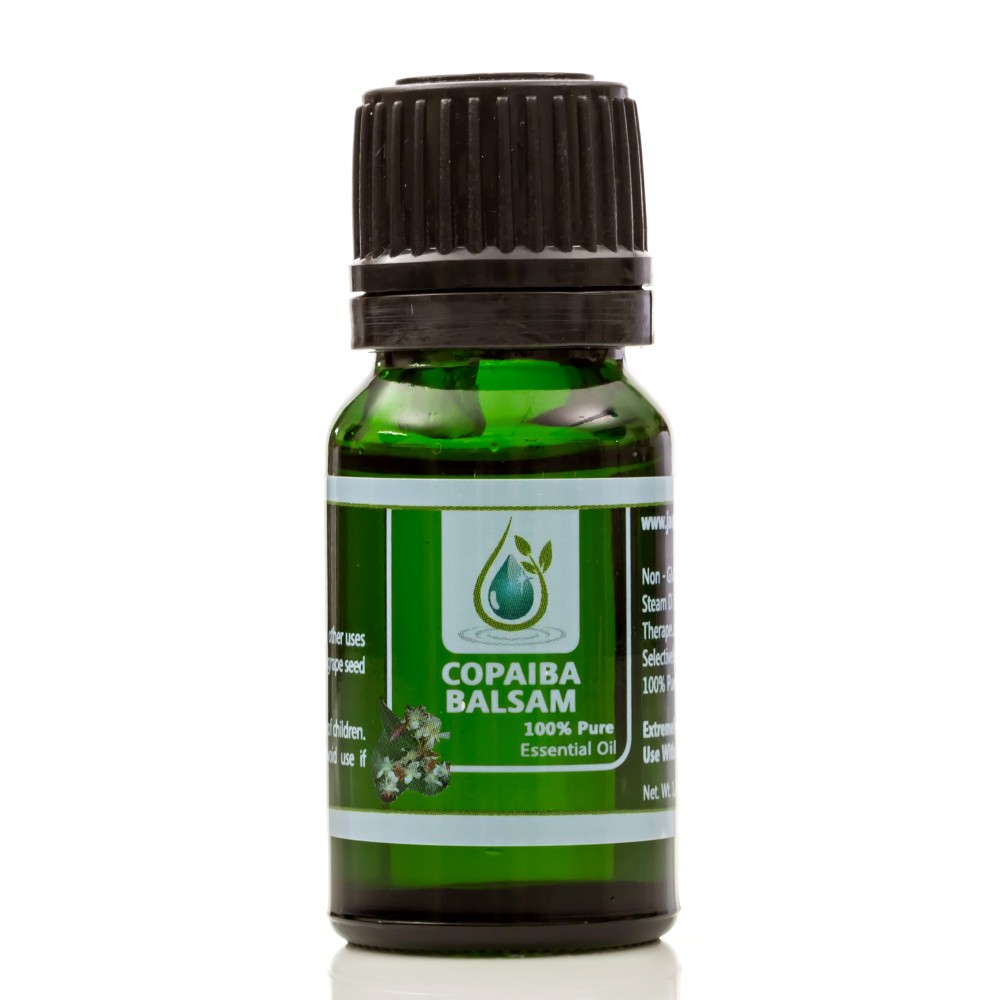
Copaiba Balsam 100% Pure Essential Oil
Copaiba Essential Oil: The Grounding, Warm Resin Oil with a Centuries-Old Story
There are oils you reach for because of how they smell, and oils you reach for because of how they feel. Copaiba is both.
It’s soft, warm, and quietly woody, with a gentle balsamic depth and a hint of spice that settles in rather than shouting over the room. Low odor strength, medium evaporation, and a presence that blends beautifully with just about everything on your shelf. If your oil collection had a steady, dependable friend, this would be it.
What is copaiba essential oil?
Copaiba essential oil is steam distilled from the oleoresin of Copaifera trees native to the Amazon region of South America. That resin is tapped directly from the trunk, similar to how maple syrup is collected from maple trees, and it’s traditionally gathered in a way that keeps the tree standing. It’s sometimes called copaiba balsam, though technically it’s an oleoresin rather than a true balsam.
Meet the copaiba tree
Copaifera trees are large, tall rainforest trees in the legume family (Fabaceae), the same plant family as beans and peas. They have feathery compound leaves, small flowers, and seed pods. The resin collects in channels inside the trunk, and when a small tap hole is made, it slowly drains out as a clear to golden liquid. The tree isn’t cut down. That’s the beautiful part: the resin is harvested, and the tree keeps growing.
A long history of traditional use
Copaiba has a long history in Amazonian traditional practices, where communities have used the resin for generations, and it later found its way into old European and North American pharmacopeias. Today it’s still a staple in Brazilian households and a popular ingredient in natural perfumery and personal care.
Meet the chemistry: what’s actually in the bottle
Copaiba essential oil is made up mostly of sesquiterpenes, a family of larger, slower-evaporating aromatic molecules. This is what gives it that deep, lingering, grounding quality.
- Beta-caryophyllene: The headliner. Often the largest component of copaiba oil, commonly around 40 to 70% depending on species and source. It’s also found in black pepper, cloves, hops, and rosemary, which is where that subtle spicy edge comes from.
- Alpha-humulene: A woody, earthy sesquiterpene that’s also found in hops and sage.
- Alpha-copaene: A woody, slightly sweet note (and the compound that gives the oil its name).
- Trans-alpha-bergamotene, delta-cadinene, beta-bisabolene, and germacrene D: Supporting players that round out the aroma and add depth.
Natural oils vary by species, region, and harvest, so every batch has its own fingerprint. That’s the beauty of botanicals.
What researchers are exploring
Copaiba and its main component, beta-caryophyllene, are among the more studied botanicals in the lab. A few highlights, shared as education rather than claims about this product:
- Beta-caryophyllene and the “dietary cannabinoid” discovery. A 2008 study in the Proceedings of the National Academy of Sciences found that beta-caryophyllene binds selectively to the CB2 receptor, part of the body’s endocannabinoid system. It’s non-psychoactive, and it works in a different way than the compounds in cannabis that affect the mind. It’s the reason beta-caryophyllene gets so much attention in wellness research.
- Copaiba oleoresin in inflammation research. A 2007 comparative study in the Journal of Ethnopharmacology looked at oleoresins from three Copaifera species in animal models. Researchers found that all three showed activity in the models, and that the C. multijuga oleoresin was the most potent of the three.
- Broader scientific interest. A review of copaiba terpenoids notes that traditional uses such as anti-inflammatory, wound-related, antimicrobial, and pain-related activities have been examined in pharmacological studies, mostly in labs and animal models.
Important context: these are laboratory and animal studies, often on the whole oleoresin or isolated compounds. They help explain why copaiba has drawn so much curiosity, but they don’t tell us how an essential oil behaves when used at home. We share them because we love the science, not to make promises.
Ways to enjoy copaiba essential oil
- Massage and body oils: Blend with a carrier oil (like our camellia oil) for a warm, grounding massage blend after a long day on your feet.
- Roller blends: A lovely base note to pair with frankincense, lavender, or peppermint.
- Diffusing: Its soft woody presence works well on its own or layered with citrus, florals, or other resins.
- Everyday self-care rituals: Add a few drops to a diluted blend and apply to hands, shoulders, or the back of the neck as part of a quiet moment for yourself.
- Natural perfumery and DIY: A beautiful fixative and base note in solid perfumes, balms, and body butters.
Aromatic profile
- Aroma: Warm, woody, softly balsamic, gently spicy
- Odor strength: Low
- Note: Medium (heart to base)
- Blends well with: Frankincense, myrrh, lavender, bergamot, ylang ylang, cedarwood, sandalwood, vetiver, black pepper, rosemary, clary sage
Dilution and safety
Copaiba essential oil is concentrated and should always be diluted before topical use. For everyday adult use, a common range is 1 to 2% (about 6 to 12 drops per 1 oz / 30 ml carrier oil). Use less for the face or sensitive skin. Please patch test before first use. For children, pregnancy, nursing, or any health condition, consult a qualified clinical aromatherapist first. For external use only. Keep away from eyes, and keep out of reach of children and pets.
Product details
- Botanical name: Copaifera officinalis
- Common names: Copaiba balsam, copaiba oil
- Plant part: Resin (oleoresin)
- Extraction: Steam distilled
- Origin: Brazil
- Ingredients: 100% pure Copaifera officinalis resin essential oil
These statements have not been evaluated by the Food and Drug Administration. This product is not intended to diagnose, treat, cure, or prevent any disease.
Copaiba FAQ
What is copaiba essential oil used for?
Copaiba essential oil is used in aromatherapy, massage blends, natural perfumery, and personal care for its warm, woody aroma. It’s valued by many people as a grounding oil in their daily rituals.
What does copaiba essential oil smell like?
Warm, soft, woody, and balsamic with a mild spicy edge. The aroma is gentle rather than sharp, which makes it easy to blend.
What is beta-caryophyllene?
It’s a sesquiterpene found in many plants, including black pepper, cloves, and copaiba. It’s often the main component of copaiba essential oil, and it’s one of the most studied aromatic compounds in plant research.
Is copaiba oil the same as CBD oil?
No. Copaiba oil does not contain CBD or THC. It is rich in beta-caryophyllene, which interacts with the CB2 receptor in lab studies, but it is a separate compound from the cannabinoids found in hemp.
Is copaiba essential oil safe to use on skin?
Always dilute and patch test first. A common range is 1 to 2% for adults. Check with a qualified aromatherapist for kids, pregnancy, or health conditions.
Does harvesting copaiba harm the tree?
Traditionally, the resin is collected by tapping the trunk, much like maple sap, and the tree continues to live.
How do I store copaiba essential oil?
Keep tightly capped in a cool, dark place. Oils high in beta-caryophyllene can oxidize over time, so avoid heat and sunlight.
What blends well with copaiba?
Frankincense, lavender, peppermint, cedarwood, bergamot, ylang ylang, and black pepper are all lovely pairings.
| UPC Barcode | 641990784565 |
|---|---|
| Scientific Data | U.S. National Library of Medicine "Copaiba oil demonstrated antibacterial activity against Staphylococcus aureus...supporting its potential use as a promising adjuvant in compounded topical formulations for wound and scar healing." Complete Scientific Study Available: http://www.ncbi.nlm.nih.gov/pubmed/27125055
"Copaiba oil-resin, extracted from the trunk of Copaifera, and traditionally used in folk medicine in the treatment of various disorders, has been shown to be an effective antiinflamatory, antitumor, antitetanus, antiseptic and anti-blenorrhagea agent." Complete Scientific Study Available: http://www.ncbi.nlm.nih.gov/pmc/articles/PMC3459418/
|
| Uses | Pain / Inflammation, Antibacterial / Antiviral |
| Aroma | Earthy / Herbaceous |